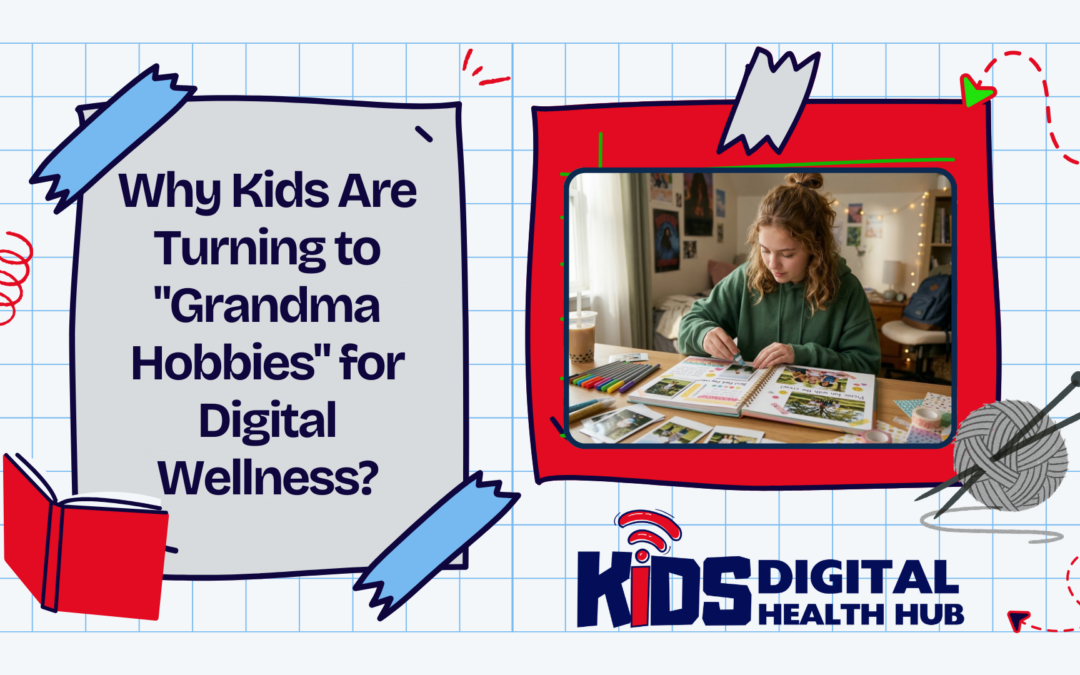
Are you constantly battling with your children over screen time? You are definitely not alone. For years, parents and educators have shared a growing anxiety over excessive screen time and the relentless weight of social media pressure. But recently, a surprising and refreshing trend has emerged among Gen Z: they are voluntarily logging off to take up screen-free hobbies aka “grandma hobbies.”
From knitting and crocheting to baking and reading physical books, young people are craving analog experiences to give their brains a break from the digital world. At the Kids Digital Health Hub, we believe this is a golden opportunity. In this post, we’ll explore why this offline shift is happening and how parents and schools can collaborate to turn this trend into long-term, healthy technology habits.
Table of Contents
Beyond the Scroll: Why Teens Need Engaging Offline Hobbies
It is impossible to imagine being a teenager today without some digital life. Smartphones and social media are the primary methods for socializing, learning, and entertainment. However, when a teen’s entire world exists behind a piece of glass, the balance essential for healthy development is lost. Digital life is often passive—even when interactive—and inherently public, leaving little room for introspection or tangible achievement. We must look “beyond the scroll” to understand why deeply engaging, real-world hobbies are not just nice to have, but critical for a teenager’s mental and emotional health.
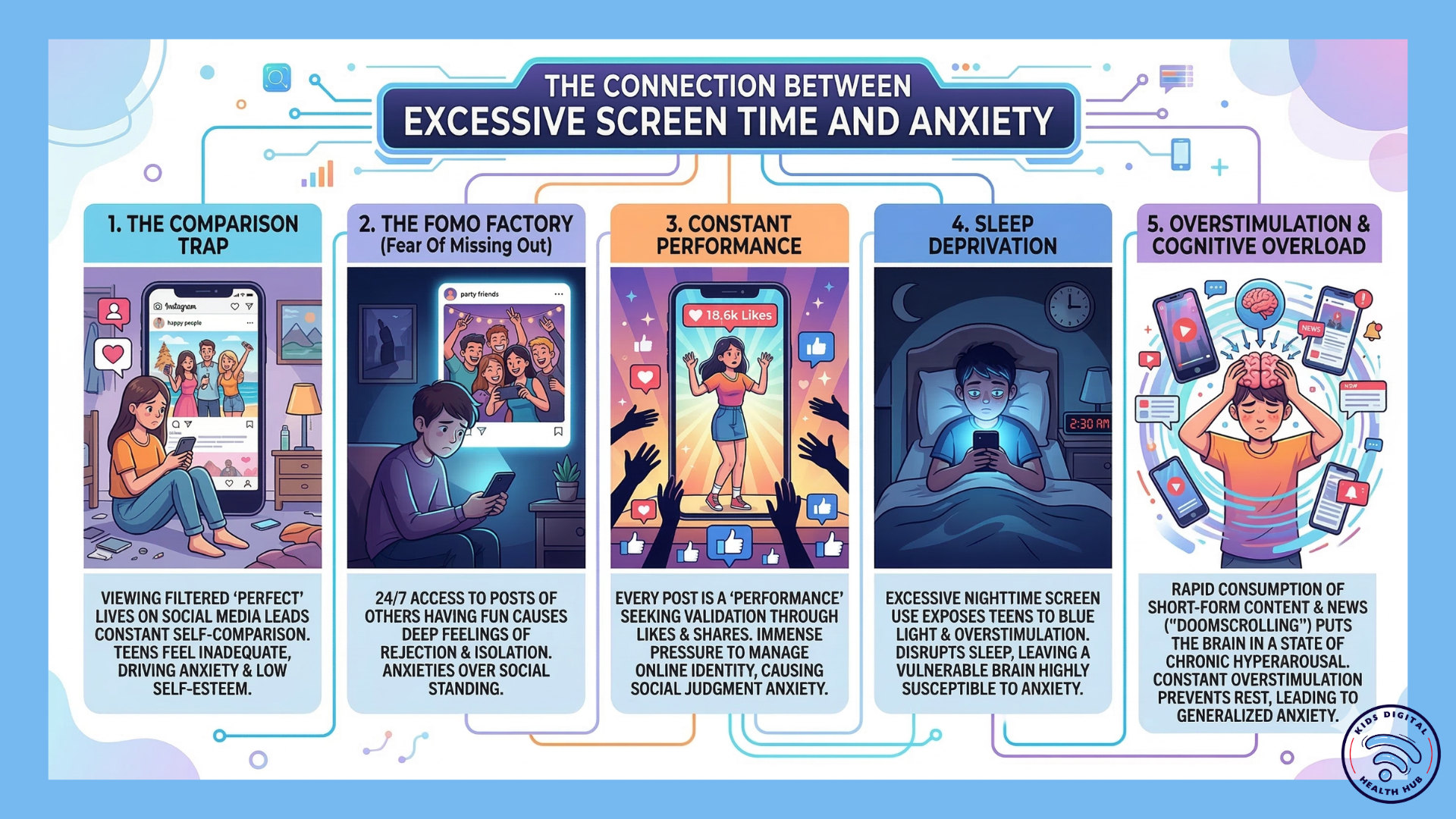
The Connection Between Excessive Screen Time and Anxiety
The connection between an always-on digital lifestyle and rising rates of teenage anxiety is increasingly clear. When teens spend the majority of their time consumed by screens, they are exposed to unique psychological stressors that previous generations did not face in the same concentrated dose.
- The Comparison Trap: Social media is inherently a highlight reel. Teens, who are already biologically primed to seek social validation, view the filtered, curated “perfect” lives of peers and influencers and compare them to their own messy, complex reality. This constant state of inadequacy is a primary driver of anxiety and low self-esteem.
- The FOMO Factory (Fear Of Missing Out): Screens provide 24/7 evidence of what everyone else is doing. Seeing a party they weren’t invited to or friends hanging out without them triggers deep feelings of rejection, isolation, and anxieties over social standing.
- Constant Performance: Every post, comment, and photo is a performance that requires a “like” or “share” for validation. This puts tremendous pressure on teens to manage their online identity, leading to persistent anxiety about social judgment.
- Sleep Deprivation: Excessive screen use, particularly late at night, disrupts the biological clock through blue light exposure and constant overstimulation. A sleep-deprived brain is a vulnerable brain, significantly increasing susceptibility to anxiety.
- Overstimulation and Cognitive Overload: The rapid-fire consumption of short-form content and news (doomscrolling) forces the teenage brain into a state of chronic hyperarousal. This persistent overstimulation doesn’t allow the mind to rest, which can manifest as generalized anxiety and a feeling of being constantly “on edge.”
The Rise of Analog Hobbies in a Digital World
How to reduce teen screen time? How to stay entertained without screens? What to do instead of screens?
Thinking your teen is missing out on real-world experiences because their eyes are glued to a screen? You’re not alone. Many parents wonder if the constant digital pull is harming their teen’s well-being or if it’s just a phase. Good news: it doesn’t have to be a battle, and isolated parenting isn’t the only option. In this guide, we’ll explore how fostering unique offline passions can transform tech habits—and show you how Kids Digital Health Hub helps families thrive by encouraging emotional resilience and proactive education, building a collaborative model for schools and caregivers.
It might seem counterintuitive that the most digitally connected generation is suddenly fascinated by cross-stitching or gardening. However, these “old-school” activities offer something a smartphone cannot: a tangible, screen-free sense of accomplishment.
When children and teens engage in hands-on activities, it forces them to slow down. It removes the pressure of constant notifications, social comparisons, and the endless scroll. Instead of passively consuming content, they are actively creating it in the real world.

Building Emotional Resilience Beyond the Screen
Emotional resilience—the ability to adapt and bounce back in the face of stress, adversity, and failure—is a foundational skill for adulthood. Passive consumption on a screen does little to build this critical muscle. Active, real-world hobbies, however, provide the perfect “laboratory” for building resilience and improving overall well-being.
- Failure as a Feature, Not a Bug: Whether they are learning to play the guitar, master a complex cooking recipe, paint a canvas, or learn to code, teens will inevitably fail. They will hit wrong notes, the cake will fall, and the code will have bugs. Unlike digital platforms where failure feels public and devastating, a hobby offers a safe space for private, productive failure. It teaches them that failure is part of the process, and persistence, not perfection, is the goal. This directly builds emotional resilience.
- Tangible Achievement vs. Digital Likes: Offline hobbies produce visible, physical results. Seeing a finished scarf they knitted, a garden bed they tended, or a song they learned to play provides a profound, deeply resonant sense of accomplishment that a “like” notification can never truly replicate. This tangible achievement builds authentic self-confidence rooted in actual skills, not social validation.
- Achieving the “Flow State”: Hobbies that demand focus, such as woodworking, rock climbing, or writing, encourage teens to enter a “flow state.” This is a state of deep concentration where the sense of time and self-consciousness disappears. Research suggests that entering flow states is a potent antidote to anxiety, allowing the mind to quiet the internal critic and the noise of digital life.
- Nuanced Social Connection: Offline hobbies often involve real-world interaction through classes, teams, or clubs. This allows teens to practice nuanced social skills—reading body language, navigating conflict, and cooperating toward a shared goal—in a physical setting that digital messaging cannot match. These genuine connections are key to reducing loneliness and building emotional safety.
Top 3 “Grandma Hobbies” to Try Together
Looking to encourage a digital detox in your household or classroom? Here are a few easy, accessible screen free hobbies to introduce:
- Crocheting or Knitting: These repetitive, mindful activities are fantastic for reducing anxiety and improving focus.
- Baking and Cooking: Measuring ingredients and following recipes provide a screen-free way to practice mindfulness (with a delicious reward at the end!).
- Film Photography or Scrapbooking: Swapping a smartphone camera for a disposable one encourages kids to capture memories without the immediate urge to edit and post them online.

Fostering Shared Responsibility: School and Home
We believe that moving away from isolated parenting toward a collaborative model is the key to lasting digital wellness. Cultivating these healthy, screen-free hobbies shouldn’t fall on parents alone.
Schools and caregivers can work together to promote these activities. Whether it’s starting a knitting club during school lunch hours or setting aside “analog time” on the weekends at home, shared responsibility ensures children have multiple safe spaces to disconnect and recharge.
Ready to Support Your Child’s Digital Wellness?
Encouraging offline hobbies is just one piece of the puzzle. If you are looking for more strategies to navigate the complexities of internet safety and digital well-being, we are here to help.
Join our community-driven movement today! Explore our K–12 Screen Guardians programs, access resources in our parent portal, or tune into the Screen Guardians Podcast for weekly insights.