The quiet courage to ask: ‘Is this really serving our students?’
In recent years, the conversation around reducing screen time in schools has moved from quiet concern to active policy change. Educators, parents, and mental health professionals are paying closer attention to how constant tech use impacts student focus, emotional regulation, and classroom engagement. At the heart of this shift is a deeper question: Are our current digital practices truly supporting learning—or simply becoming the norm without reflection? At McPherson Middle School in Kansas, one principal decided to pause, reassess, and lead with intention. What followed was a bold reimagining of how—and when—technology should serve students.
Table of Contents
School limits devices to prioritize student focus and health
A year ago, if you had walked into McPherson Middle School, you would’ve seen what’s come to feel normal in most classrooms: rows of students behind personal devices, teachers tethered to screen management tools, occasional glances traded across monitors filled with tabs and distractions.
But this past winter, everything changed.
And it started with a question that too few of us feel safe enough—or supported enough—to ask:
“Is this actually helping our kids?”
A principal’s decision to pause
In a small Kansas town with a big heart for its students, McPherson Middle School Principal Inge Esping stood alongside her staff and asked that question out loud. And instead of brushing past it, they stayed with it. They listened to the discomfort it stirred. And then, they chose to do something that felt both radical and completely human:
They returned the Chromebooks.

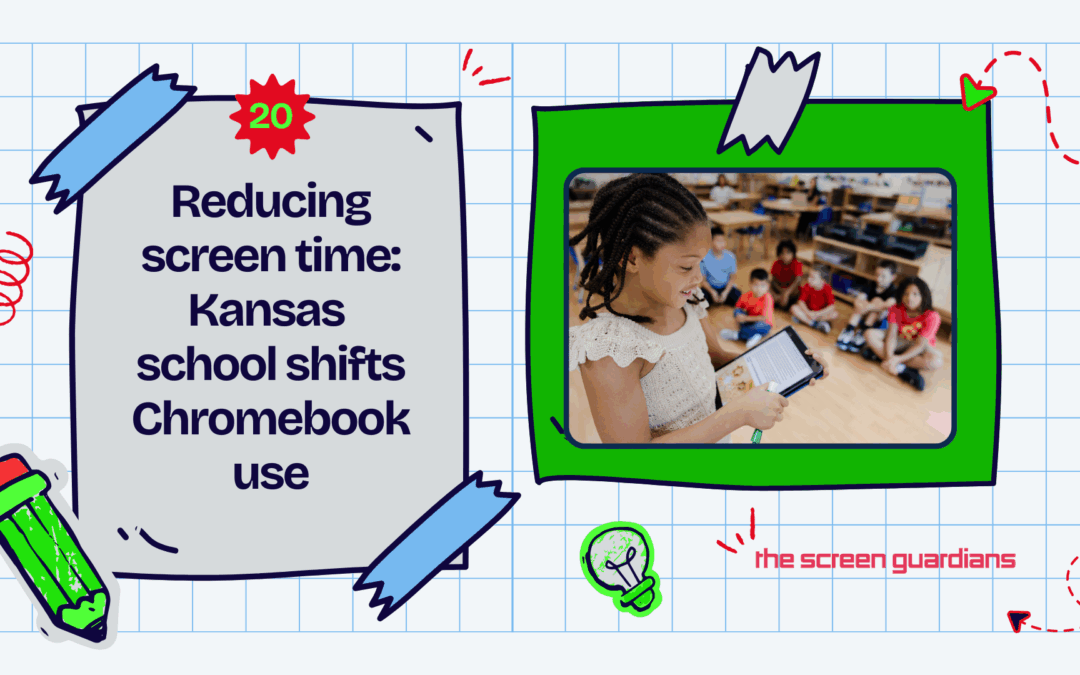
Well, not all of them. But enough to mark a big shift in how technology is used in their school moving forward. Instead of continuing a 1:1 device model, McPherson Middle School transitioned to classroom-based Chromebook sets. Students no longer carry their laptops from one class to the next. Instead, they engage with them only when the lesson calls for it—as one tool among many, not the default mode of learning.

reducing screen time in schools: Why it matters—especially now
This wasn’t a rash decision. It was rooted in data, lived experience, and hundreds of hallway conversations. Inge, her building leadership team, and the teachers at McPherson had been watching the patterns for years—disengaged students, rising digital distractions, emotionally exhausted teachers, and overwhelmed parents struggling to manage tech use at home.
What they saw was clear:
- Behavior incidents had decreased 70% after implementing a cell phone-free policy.
- Teachers were spending too much time managing screens, and not enough time connecting with students.
- GoGuardian data confirmed what teachers already knew: students were logged in—but not tuned in.
- Families were quietly asking for help, many of them already trying to limit screen time at home and feeling powerless.
So when the school discovered The Anxious Generation and used it as a springboard for their leadership conversations, something clicked. The data wasn’t just validating—it was energizing. And when a teacher secured a grant to purchase Chromebook carts for the classroom, the final piece fell into place.
They didn’t wait until conditions were perfect. They chose progress over perfection. And it’s already changing lives.

The real goal: restoration, not restriction
There’s a temptation to frame stories like this in absolutes. “This school banned tech” or “Paper is back.” But Inge is careful to push back on narratives like that.
“We are not anti-tech,” she says. “We’re simply re-centering learning around what matters most—meaningful engagement, healthy brain development, and real human relationships.”
In McPherson, that looks like:
- Intentional screen time, used only when needed.
- Hands-on learning: textbooks, workbooks, whiteboards, and meaningful eye contact with teachers.
- Teachers collaborating across subject areas to find practical low-tech strategies.
- Ongoing family conversations about screen habits at home—what’s working, what feels hard, and how to align school use with personal values.
This is not a leap backward—it’s a thoughtful rebalancing.
“We aren’t just teaching content. We’re shaping brains.”
That’s a truth we hold close to our hearts here at the Kids Digital Health Hub. And it’s one reason we’re grateful for schools like McPherson Middle School, who are making bold—and sometimes bumpy—moves for the sake of their students’ long-term growth.
Kids today are growing up in a world with very few limits and even fewer pauses. Schools feel those pressures acutely. But what Inge and her team have shown is that you don’t need to wait for new standards or perfect plans. You can lead with integrity and intention—one conversation at a time.
We believe digital tools have a place in the classroom. But like any tool, they need guardrails—and context. And most importantly, they need educators and families courageous enough to ask the hard questions.
As Inge shared near the end of our episode:
“We’re not trying to experiment with your child.
We’re just asking—what if we do less of what isn’t working?
And more of what helps them actually thrive?”
That, to us, is leadership.
For school leaders asking “Where do I start?”
Inge’s advice is simple:
- Start the conversation. Ask your school leadership team and staff how the current device model is serving students—and how it’s not.
- Look at your policy. Many districts never formally adopted a required tech usage policy. You may have more flexibility than you think.
- Talk with families often. Share your questions, your hesitations, and your data. Most parents are relieved to be part of the process.
- Pilot something small. Tech-Free Tuesdays. Bellwork on paper. A shift to collaborative games for classroom warm-ups. It doesn’t have to be dramatic to make a difference.
- Be honest—this will be imperfect. But it will be worth it.
One year from now…
Inge hopes students will feel more connected to their learning. She hopes teachers feel less like digital lifeguards and more like mentors. She hopes parents feel more empowered and less overwhelmed. And she hopes decision-makers everywhere ask themselves, without shame or urgency:
“How are we using technology—and how is it using us?”
Because sometimes, leadership looks like pressing pause.
And in that quiet space, a better way begins.
healthy tech boundaries for kids
If this story resonates with you, or if you’re a school leader considering a similar shift, we invite you to explore our K–12 digital wellness curriculum. The Screen Guardians program is rooted in neuroscience, emotional health, and real-world safety—and designed to help schools, families, and students find balance in a connected world.
You can also find more interviews, tools, and practical guidance at the Kids Digital Health Hub.
Let’s keep this conversation going. Because our children deserve schools that not only educate—but truly protect and prepare them.