This blog explores the powerful connection between digital learning and brain development, featuring insights from neurotherapist Susan Dunaway.
Some conversations linger long after they’re over. They don’t just stay with you—they shift something inside of you.
My recent talk with Susan Dunaway, a licensed neurotherapist and the brain health advisor here at Screen Guardians, is one of those conversations. Parts of it unearthed old feelings I’ve carried as a parent navigating a tech-saturated world. Other parts gave me language for things I’ve only sensed—realizations that we’ve been sold a story about digital learning, and many of us didn’t know to ask: At what cost?
In this interview-turned-podcast-turned-blog, I want to share Susan’s story. Not as a scare tactic. But as a way to open the door—gently but intentionally—to deeper understanding about how screens are impacting our children in ways we can no longer ignore.
Table of Contents
A journey of noticing: digital learning and brain development
Susan started sounding the alarm more than a decade ago—long before terms like “digital wellness” or “tech addiction” were whispered in school board meetings. She began noticing changes in her own children and in the students her husband taught. At first, it was small things: shortened attention spans… less tolerance for boredom… more emotional reactivity. But the patterns added up.
When her son’s school introduced iPads through a pilot initiative, Susan didn’t just watch—she researched. Extensively. She read studies, dissected footnotes, and went deep into brain science and child development. What she found disturbed her.
“I thought this must be exaggerated,” she told me. “But after looking at the data myself, I realized—it’s not. If anything, the concerns were underplayed.”
That sense of urgency eventually pulled her into advocacy. She spoke in churches, led parent education nights, and—years later—was called by Kansas State Board of Education officials who had heard a now-viral clip of her warning them, in 2015, about the very trends unfolding today.
What screens can’t replicate—and why it matters
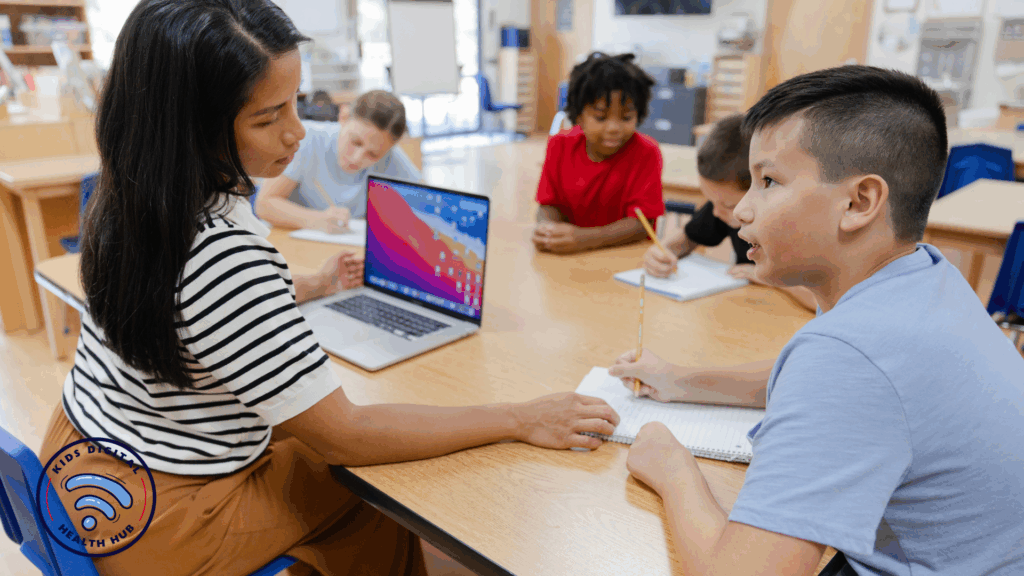
In our conversation, Susan made one thing incredibly clear: the kind of learning that supports thriving brains—the kind that builds focus, empathy, agency, and complex reasoning—happens through lived, embodied, relational experiences. Not apps. Not tablets. And certainly not isolated time in front of glowing rectangles.
“Our brains are built to learn by watching, doing, moving, and connecting with others,” she explained. “When you output that to a screen, you remove huge parts of what supports development.”

Susan spoke plainly about the ways digital learning is neurologically shallower. Whether a kindergartener learns colors by tapping a screen versus painting them with their fingers, or a high schooler scrolls an e-textbook instead of flipping real pages—those differences matter. They influence memory, comprehension, and long-term retention in ways we’re just beginning to study.
She used the example of handwriting versus typing. Taking notes by hand activates more brain regions, enhances memory encoding, and supports deeper processing. “Typed notes might be faster,” she said, “but written notes are usually better learned.”
And reading? Physical books activate both hemispheres and all six cortical layers of the brain. Screens don’t.
A system in need of pause
If these insights feel grave—it’s because they are. But Susan isn’t here to scold or shame. She’s lived in the tension between clinical truth and compassionate understanding.
“I’m not anti-tech,” she told me. “I’m pro-choice—real, informed choice. That only happens when we tell the full story about how screens are shaping our kids’ brains.”
She’s also honest about how we got here. Schools adopted tech quickly. Parents trusted the promises. And during COVID, screens became a lifeline. But as we’ve emerged from that window of survival-mode decision-making, the long-term consequences have become harder to brush aside.
In fact, Susan’s own data shows that academic readiness and standardized test scores began their downward trend before the pandemic. The real inflection point? Around 2015—when most U.S. school districts implemented one-to-one tech programs.
Shifting the conversation from blame to action
This is not about blaming schools or parents. It’s about stopping long enough to ask a different set of questions:
- Is this the kind of learning we want for our kids?
- Are the efficiencies of ed tech worth the developmental losses?
- What else might be possible when we pause, reflect, and adjust?
At Screen Guardians, we’re trying our best to help answer those questions with tools that inform—not alarm. With curricula rooted in neuroscience, classroom-tested strategies, and the quiet conviction that we can do better once we know better.
That’s why we’re so honored to have Susan on our team. Her clinical brain expertise doesn’t just shape our curriculum—it deepens every conversation we have with the families and schools we serve.
She reminds us that this isn’t about removing all devices. It’s about creating thoughtful boundaries—times when screens are away, attention is present, and children are allowed to be loud and curious and wonderfully human.
Let’s raise kids who use technology—without being used by it
Susan said something in our conversation that has stayed with me:
“We have to teach kids what’s happening when they’re on a screen. Not just tell them to be nice online or do their assignments. They deserve to know how tech is designed, how it affects their moods, focus, and choices. When kids understand that, they can start to make informed decisions instead of just scrolling out of habit.”
We couldn’t agree more.
This January 2026, our Screen Guardians K–12 curriculum launches in districts across the country. It’s a 12–14 week, developmentally aligned digital health and safety program taught by teachers, supported by neuroscience, and designed for real life—because we’re not anti-tech. We’re tech-conscious. And we believe both students and their adults deserve informed, compassionate guidance.
If this blog stirred something in your heart or home, I invite you to explore our resources, share them, or reach out to us. You’re not alone in this journey—and you’re not behind. You’re right on time.
Learn more
- 🌐 Visit Kids Digital Health Hub to explore programs, tools, and podcast episodes.
- 💬 Interested in bringing Screen Guardians to your school or district? Contact Katie
Let’s keep asking the brave questions. For our kids. For our communities. And for the future they’ll inherit.