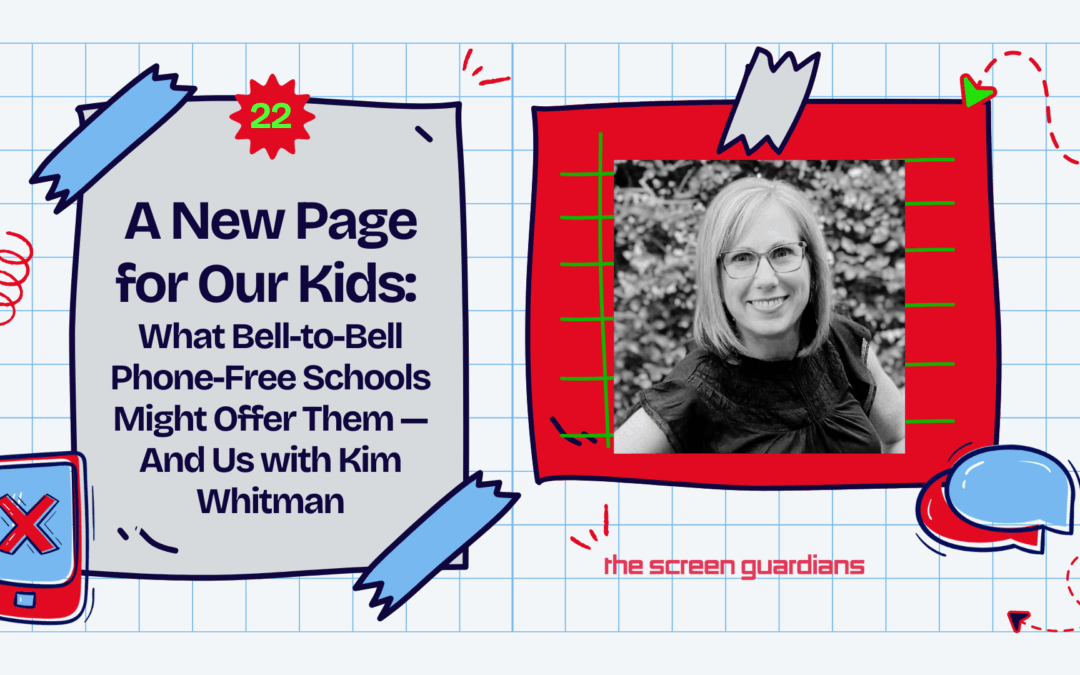
When we talk about phone-free schools, we’re not just talking about policies, rules, or bans—we’re talking about an invitation to rethink how we protect focus, foster real connection, and support mental well-being in our children’s learning environments. Last week, I sat beside a small group of passionate parents and educators, advocating for change right here in Kansas. We weren’t asking for perfection. We were asking for space—space for kids to be fully present, without the constant pull of a buzzing phone. In this episode of The Screen Guardians Podcast, I speak with Kim Whitman about what a truly phone-free school day looks like, and why this seemingly simple shift might be one of the most powerful things we can do for our kids.
Table of Contents
Phone-free schools aren’t about punishment—they’re about protection. Here’s why.
I want to start with a story. Not one from my childhood—but from today.
Last week, I stood shoulder-to-shoulder with a group of parents, educators, and advocates at the Kansas State Capitol. It wasn’t a polished, pretty press moment. It was real and gritty—honest words in wood-paneled hearing rooms, the air thick with both urgency and hope. In front of lawmakers, we made the case for something simple, but increasingly rare: classroom spaces where kids can learn, connect, and grow without the constant hum of a phone in their pocket.
That’s the heart of Senate Bill 302 here in Kansas—a bill that supports bell-to-bell phone-free school days.
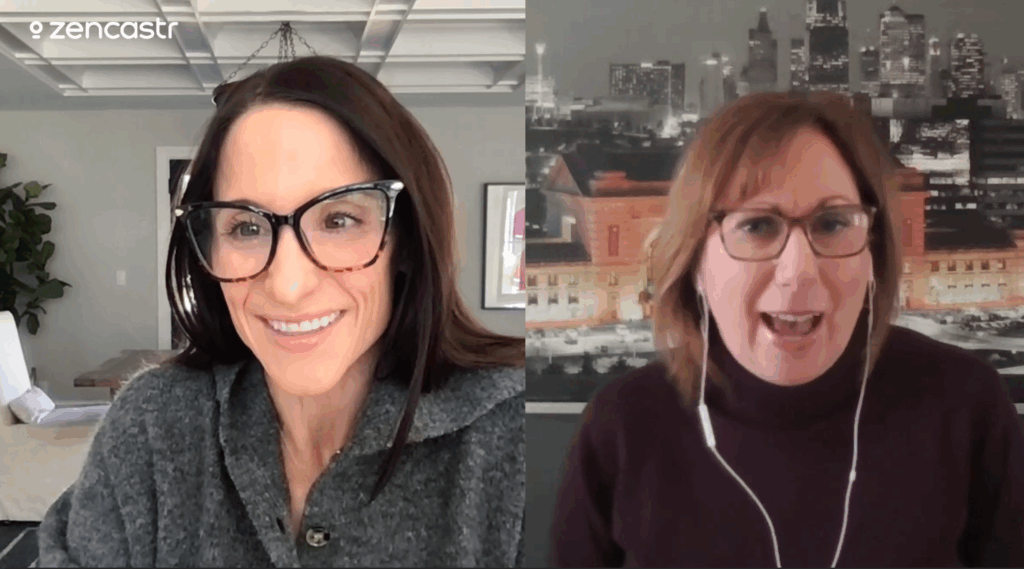
And in this week’s episode of The Screen Guardians Podcast, I had the honor of discussing this moment, and the bigger movement it belongs to, with my friend and fellow advocate, Kim Whitman.
Kim isn’t just a voice in this space—she’s a leader. She’s helped launch the Phone-Free Schools Movement, co-leads the nonprofit Smartphone Free Childhood U.S., and is helping districts and families across the country imagine something better: schools where real connection and real learning take priority.
Kim Whitman – LinkedIn
What “bell-to-bell” really means—and why it matters
If you’re a parent like me, the idea of a phone-free school day might trigger two competing instincts: relief and worry.
Relief, because maybe, just maybe, our kids could breathe a little easier—freed from the flood of notifications, the quiet pressure of social comparison, and the addictive loops of digital distraction.
But worry too. What about safety? What if they need me?
Kim answered those concerns with the clarity of someone who’s lived every side of this debate. “Bell-to-bell” means phones are off and stored away during the entire school day—not just during class, but through passing periods, lunch, and other “downtime.” Why? Because those breaks between classes are where a lot of harm sneaks in. Cyberbullying. Social drama. Coordinated fights. Distracting group chats.
We expect kids to switch from these digital worlds instantly back into a learning environment, like flipping a switch. But our brains, especially their still-developing ones, aren’t built to task-switch like that.
And perhaps most poignantly—when phones are away, connection returns. School lunchrooms become louder and livelier. Students start looking each other in the eye again. Teachers notice stronger relationships and a sense of belonging grows.
That’s not nostalgia. That’s neuroscience.
The myth of safety—and the power of presence
One of the hardest parts of this conversation is addressing a parent’s fear. When the unimaginable happens in a school—a lockdown, an emergency—we want access to our kids. I get it. Kim gets it too.
But as she explained, the experts are clear: calls and texts during a crisis don’t keep kids safe. They distract them. They delay emergency response. They flood schools with panicked parents and misinformation.
What actually makes a student safer? Being able to listen to their teacher. Having their phone muted, dark, and out of reach so it doesn’t light the way to where they’re hiding. Letting schools manage communication so responders can do their jobs.
It’s hard to hear. It goes against every instinct we have as parents.
But again—this work isn’t about our comfort. It’s about our children’s safety, and their sanity.
Collective action changes culture
One thing Kim said that’s echoed in my heart all week is this: “We’re all doing this. Every family is struggling with screens.”
That’s why this issue is such a powerful unifier. It’s not left or right. It’s not public, private, or homeschool. It’s about what every single child deserves—a chance to develop social skills face-to-face, build focus, and reclaim their ability to just be a kid again.
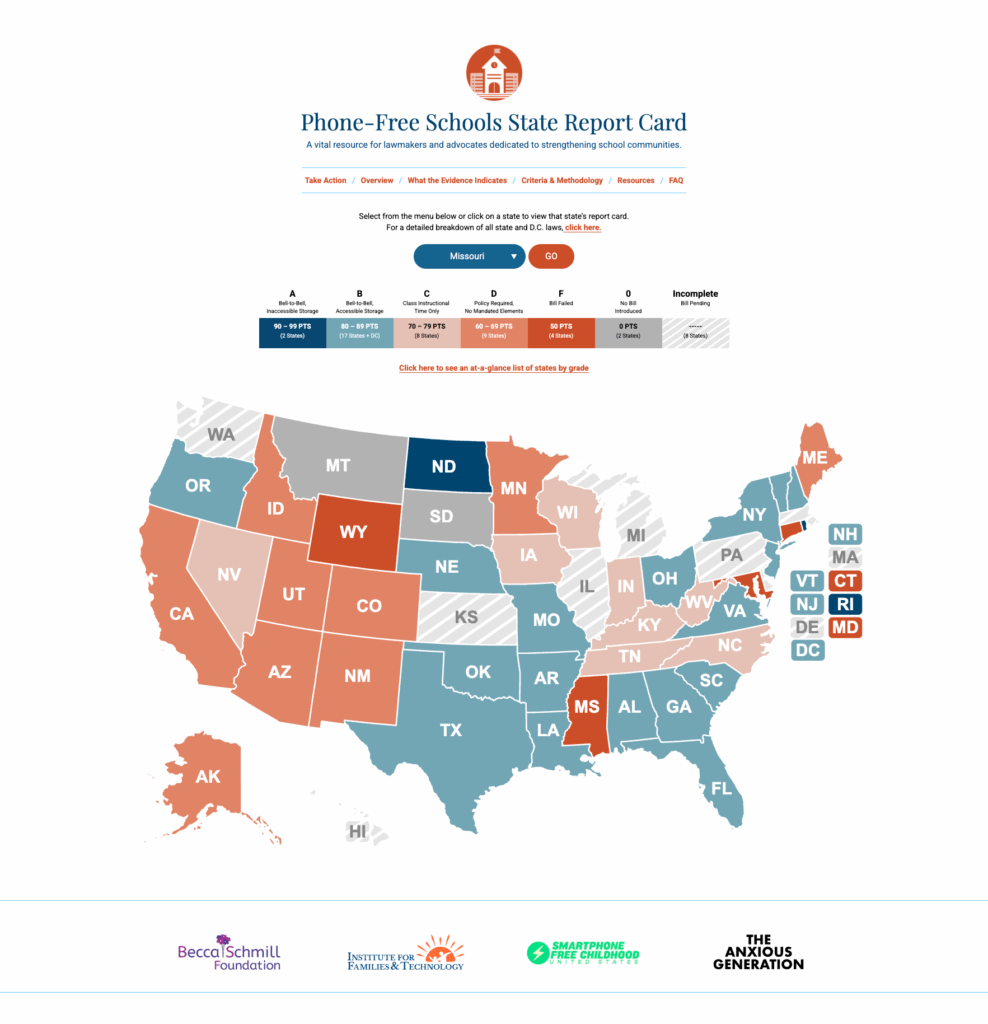
States like North Dakota and Rhode Island are already leading the way. They’ve passed bell-to-bell legislation with strong, clear policies—and are seeing improvements in behavior, belonging, and even mental health, particularly for teenage girls.
And now: Kansas is on deck.
What we choose to do here—and across the country—can fundamentally reshape the next decade of childhood. But we can’t wait for someone else to speak up for it.
What you can do (today) for Phone-Free Schools
If your school doesn’t have a phone-free policy but your gut tells you it should, start with curiosity.
- Ask your school leadership what the current phone policy is. (Many parents assume they know—it’s worth checking.)
- Talk to your school board about what’s possible.
- Gather with other parents. Host a community screening. Share resources. Even just start texting each other about questions you have—it matters.
- Explore the findings and resources at phonefreeschoolsreport.org to see how your state is doing and what you can do to improve it.
And if you’re looking to link arms with others, Kim’s organization is a beautiful place to land. At smartphonefreechildhoodus.com, you’ll find toolkits, event ideas, book clubs, and a map of local parent groups who are already gathering.
Because this isn’t something any of us can do alone. And we’re not meant to.
A quiet shift—and a loud hope
There’s a shift happening. A whole cultural moment where we’re naming what our kids really need—and how far we’ve drifted from it.
Kim said it best: “Parents of younger kids are wide awake. They’ve watched the older kids and they don’t want that childhood for their own.”
This is how we begin again: together, story by story, policy by policy, school by school.
One brave conversation at a time.
To listen to the full episode of this conversation and explore more resources, visit The Screen Guardians Podcast
Explore Kim Whitman’s PSA: Let’s Change the Norm Together
View the full phone-free report card: phonefreeschoolsreport.org
If this conversation stirred something in you, share it—with a friend, another parent, a teacher, or your school board. You just might start a ripple.
Because normal isn’t always what’s right. And it’s okay to change it.